
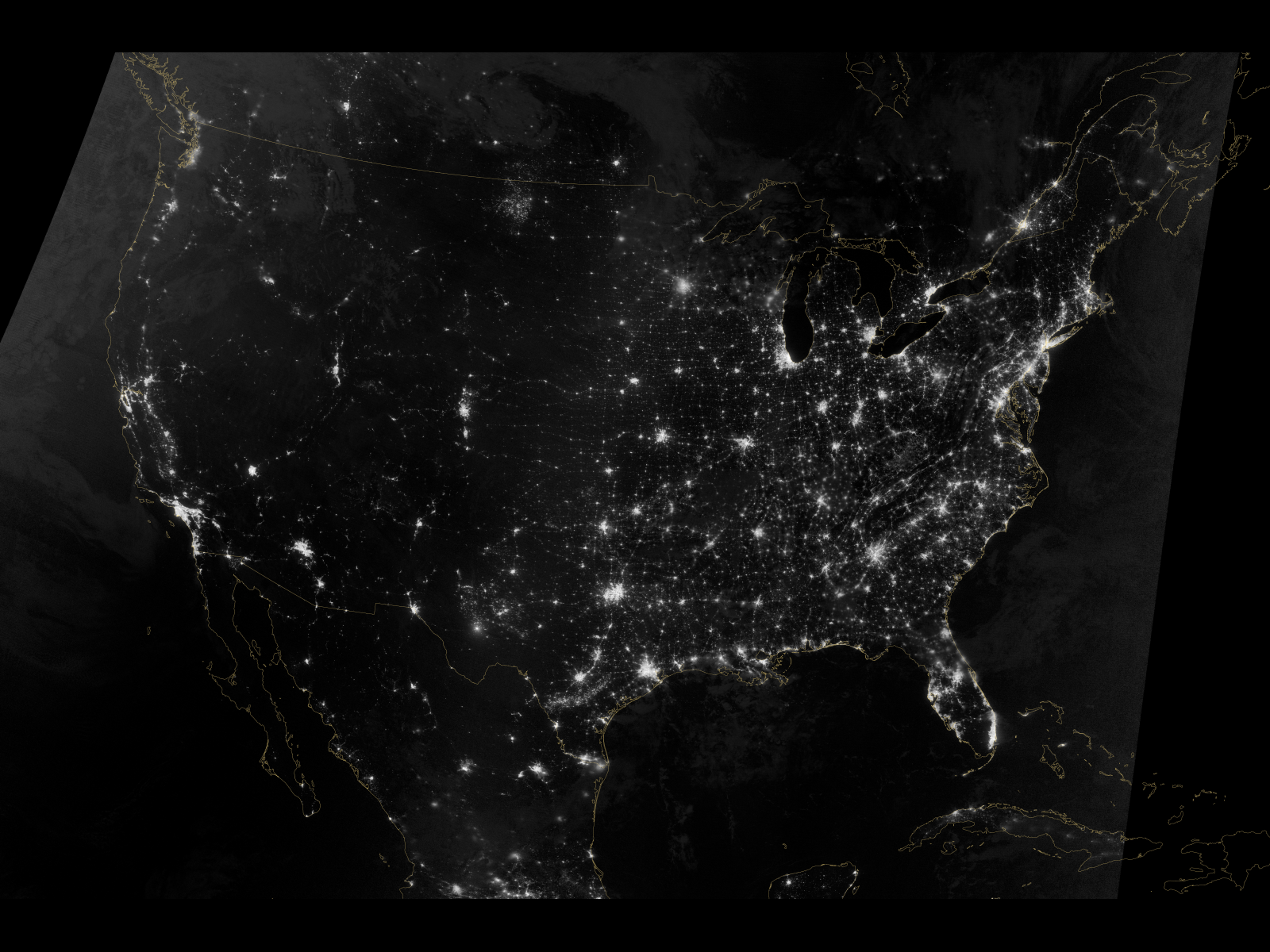
The attached photo is via NASA and shows a different view of the US for the Thanksgiving holiday, touting The United States has more roads—4.1 million miles (6.6 million kilometers)—than any other nation in the world, and roughly 40 percent more than second-ranked India. About 47,000 of those U.S. miles are part of the Interstate Highway System, established by President Dwight Eisenhower in the 1950s. And pointing out that 43.4 million Americans will travel, 90% using these roads. Shown here by satellite at night. The other side of this issue is the safety issue, and the fact that Forbes has highlighted that it’s also the deadliest holiday of the year. One side is a stat to tout, one is a cautionary tale. They are different perspectives.
In marketing circles there is an old adage, “perception is reality,” implying that having someone perceive your idea or product as the best is the same as being the best.
C.S. Lewis in his classic, The Magician’s Nephew may have the best explanation:
“What you see and what you hear depends a great deal on where you are standing. It also depends on what sort of person you are.”
Quality wise, it’s not necessarily reality, of course, but sales wise and in market experience, it often is. A classic example often cited is the Beta/VHS war (Beta was better, VHS won). It can be the road block to a product or idea, or it can be the entry point. And it is no less relevant to the bandwagon phenomena of today’s social media. I think the best article I’ve seen on it is by Cheryl Conner for an article in Forbes. Reviewing in fair depth some of the effects of purchased twitter followers (e.g. Justin Bieber) and other techniques. In the end, there is a perceived plus side for marketers, perhaps, in that things can look supported even when they are not. But there is obvious danger too in that it denotes the need for clear metrics so that the ones telling the story do not fall into a trap of believing in the world they are creating.


